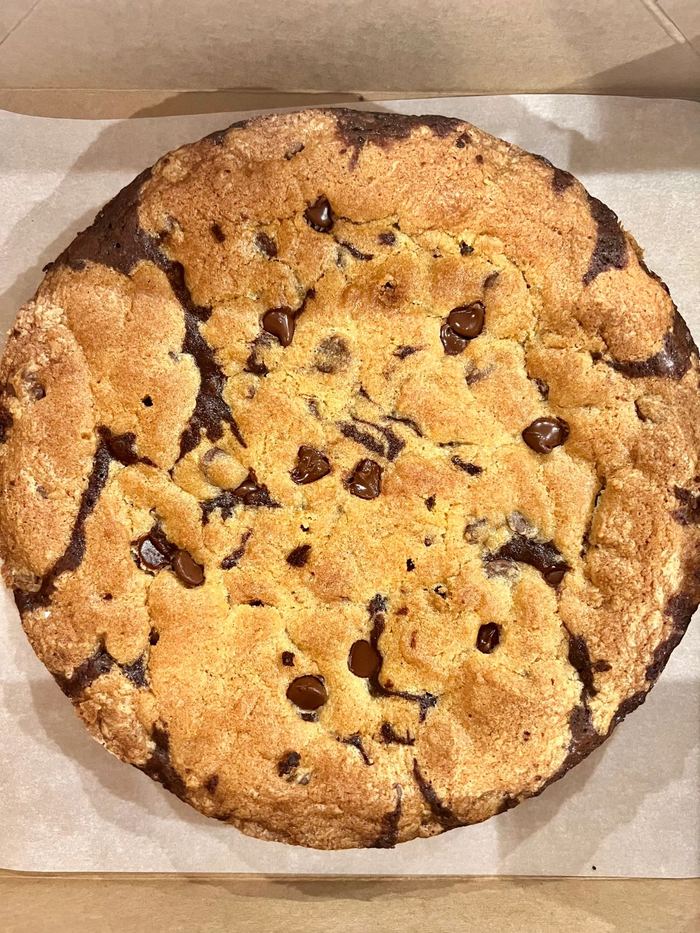
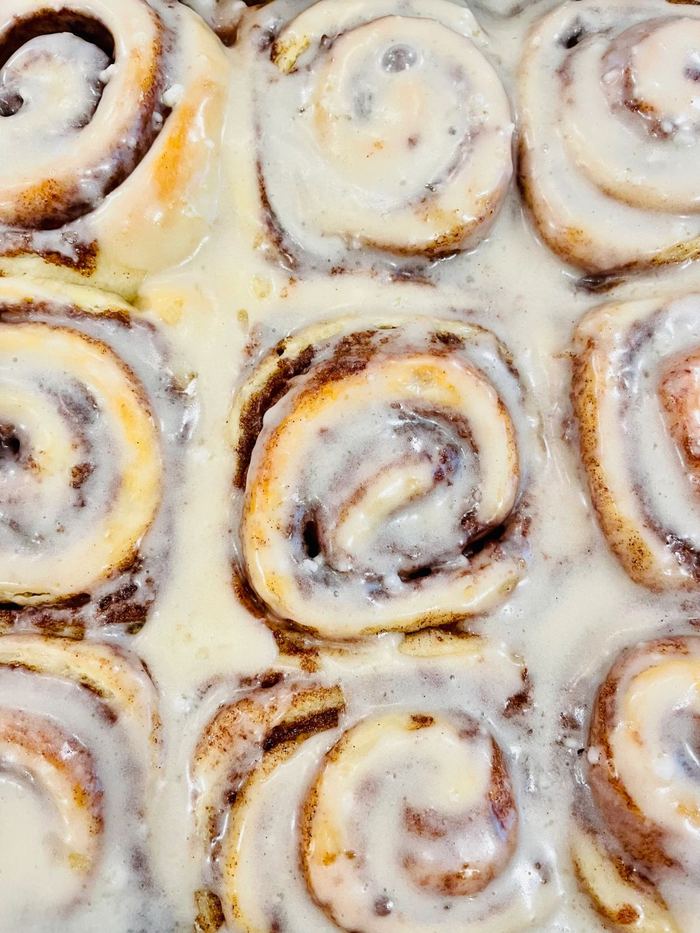
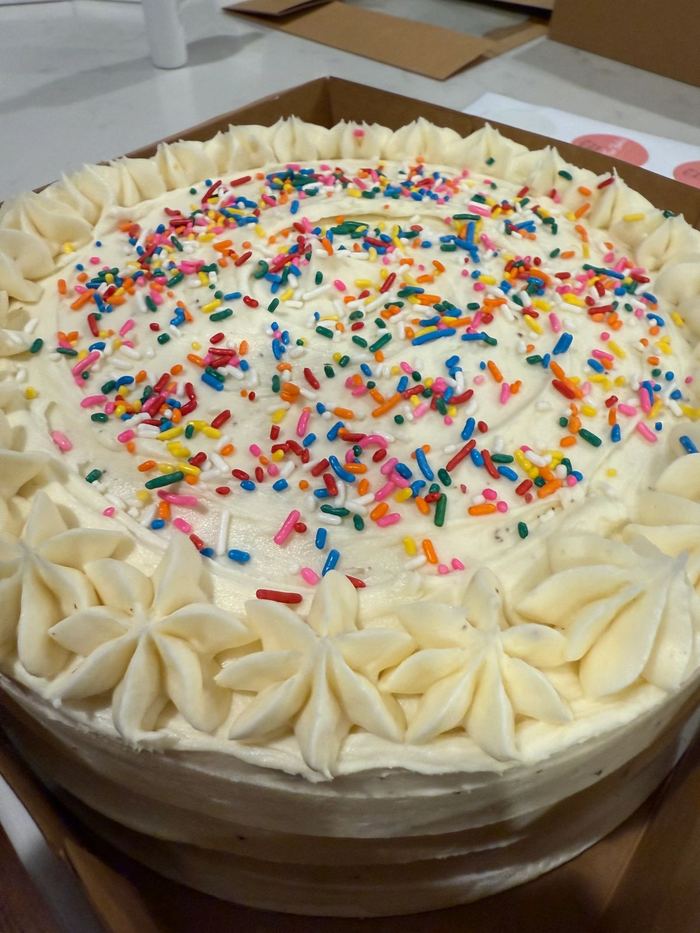
Indiana University · Kelley School of Business

Go Hoosiers!

AvikSattiraju

A business education that started with a bakery.

I’m a first-year business student at Indiana University and co-founder of Nut Free Baker. I’m studying finance with the perspective of someone who has taken orders, worked with customers and helped run a small business.

Westwood, MA / Bloomington, INClass of 2030 / Student portfolio
2022Co-founded Nut Free Baker
100+Participants in the business club I co-founded
2030Expected graduation from Indiana University

01 / Why finance

Every order raised
a finance question.

What should a wedding order cost? How many cookie cakes should we bake for a busy weekend? Is a weekly restaurant delivery worth the time?

I co-founded Nut Free Baker in 2022 with my twin brother, Ansh, for people who need baked goods made without nuts. As CEO I run operations, marketing and customer service, and the business has grown past $30,000 in revenue and 200 customers.

Running a real business got me interested in the numbers behind it. Pricing, costs and cash are the same questions an analyst asks about a public company, just at a smaller scale. That is why I chose finance at the Kelley School of Business, and why the models on this site start with real numbers: a public bakery company’s SEC filing, and a scorecard that holds forecasts accountable.

Outside the bakery I co-founded a 100-member business club at Westwood High, judged a student pitch competition and coached youth soccer teams to two league titles.
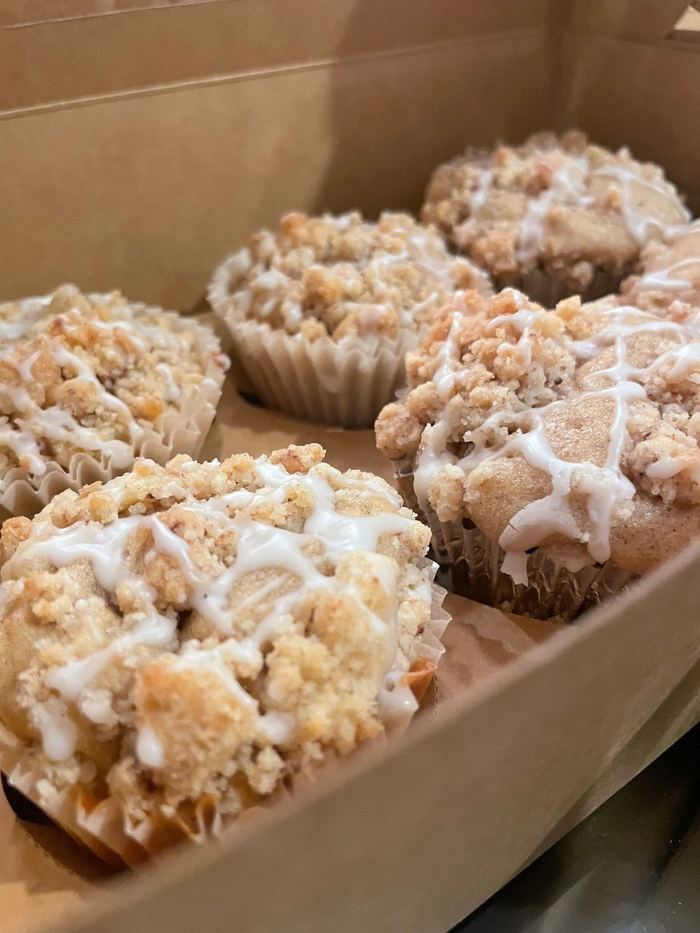
Crumb-topped muffins with icing
From the Nut Free Baker kitchen.

02 / Finance lab

Models built on
real numbers.

A forecast scorecard, a valuation of a real public bakery company from its SEC 10-K, and two small-business models. Open any model to change the inputs, read the method and download the results.

Finance, made tangible

A flagship model and three interactive projects
Flagship projectIllustrative scenario
Brier
Brier score · lower is better

Research model

Forecast Scorecard

Analysts make probability calls all the time, such as whether a company will beat its earnings estimate. This scorecard grades those calls with the Brier score, splits the score into calibration and discrimination, and charts stated confidence against what actually happened.

01 / Finance labReal public data
Equity value
Value / share · modelUSD

Interactive modelReal data

Valuing a real bakery company

A five-year discounted cash flow model loaded with Flowers Foods’ actual FY2025 figures from its SEC 10-K, with a sensitivity table for the two assumptions that matter most.

02 / Finance labIllustrative scenario
Contribution
Contribution / itemUSD

Interactive model

Bakery unit economics

Compare price, variable costs and volume to understand contribution, break-even sales and modeled operating profit.

03 / Finance labIllustrative scenario
Time and contributions
Difference at horizonUSD

Interactive model

The cost of waiting

Compare two saving timelines, including the effect of fewer contributions and a shorter period of compounding.

Built with AI-assisted implementation as learning projects. Models marked real data use cited public sources (SEC EDGAR, Bureau of Labor Statistics); the others use illustrative or simulated inputs. Every model shows its method and limits and runs entirely in your browser. Nothing here is financial advice. New to these terms? Read the plain-English guide.

Plain-English guide

What the terms mean,
in everyday words.

You don’t need a finance background to follow these projects. Here is every term they use, explained simply, and how they were built.

Forecast Scorecard

Am I as right as I think I am?

Probability forecast
A prediction stated as a percent, such as “70% chance this company beats its earnings estimate.”
Earnings estimate
The average profit forecast that Wall Street analysts publish before a company reports its results.
Brier score
A grade for probability forecasts. 0 is perfect; always saying “50-50” scores 0.25. Lower is better.
Calibration
Whether your confidence matches reality: events you call 70% likely should happen about 7 times in 10.
Base rate
How often the event happens overall, before you know anything special.
Skill score
How much better your forecasts are than always guessing the base rate. 0% means no better.

Valuing a real bakery company

What is Flowers Foods worth?

Valuation (DCF)
Estimating what a company is worth today from the cash it should produce in the future. Future cash counts for less because money later is worth less than money now; that adjustment is called “discounting.”
SEC Form 10-K
The detailed annual report every U.S. public company must file with the government. The company numbers in this model come from it.
Free cash flow to the firm
Cash the business has left after paying its costs, taxes and new equipment, before paying its lenders.
Discount rate
The yearly return investors expect for the risk they take. A higher rate makes future cash worth less today.
Terminal growth
The steady growth assumed for all the years after the five-year forecast.
Net debt
What the company owes minus the cash it holds.
Enterprise value, equity value, per share
Enterprise value is what the whole business is worth. Subtract net debt to get the owners’ share (equity value), then divide by the number of shares.
Sensitivity table
Shows how the answer changes when the two most important assumptions move up or down.

Bakery unit economics

What does each sale contribute?

Variable cost
A cost that rises with every item made, such as ingredients and boxes.
Fixed cost
A cost that stays the same however much you sell, such as equipment or a monthly fee.
Contribution
Price minus variable cost: what each sale adds toward covering fixed costs.
Break-even
The number of sales needed for contributions to cover all fixed costs.

The cost of waiting

What changes when saving starts later?

Compounding
Earning returns on earlier returns, so growth speeds up over time.
Annual return
The yearly growth rate assumed for savings. It is a scenario, not a promise.

How these projects were built

  1. 01

    The questions

    Each project starts from a real question: running Nut Free Baker with my brother, or studying finance at Kelley.

  2. 02

    Built with Claude

    The models were built with Claude, an AI assistant made by Anthropic. Claude wrote the code that runs on this page and the automated tests that check it.

  3. 03

    Checked, not assumed

    Every model uses a standard, published method, cited inside the model. Tests compare each result with an independent answer, and a separate AI reviewer checked the work; its corrections were made.

  4. 04

    Private by design

    The models run entirely in your browser. Nothing you type is saved or sent anywhere.

Open any model above and use “Method, assumptions and limits” to see the exact formula and its source.

03 / Nut Free Baker

Getting the word out,
and growing it.

My twin brother Ansh and I co-founded Nut Free Baker in 2022 and co-own it today. We make the big decisions together; my side is mostly marketing, communication and strategy, and Ansh’s is mostly recipes, sourcing and getting orders made and delivered.

Nut Free Baker logo: a chef’s hat above the words Nut Free Baker, Westwood, MA, on a coral background
Our logo, designed by my brother Ansh.

Marketing & communication

  1. 01

    Online presence

    I built and run the bakery’s presence on nutfreebaker.com and Instagram (@nutfreebaker_), where customers discover us and order.

  2. 02

    Reputation

    Attentive customer service turned buyers into advocates: the bakery has earned 50+ Google reviews.

  3. 03

    Press & community

    I told our story to the Westwood Media Center. We showed up at Westwood Day, and Nut Free Baker sponsors the inclusive indoor soccer team I founded.

Strategy & implementation

  1. 04

    Customer mix

    We grew from one-off orders to weddings, a local senior center and recurring deliveries to Comella’s restaurant: revenue we can plan around.

  2. 05

    Operations

    As CEO I run day-to-day operations and customer service, turning plans into orders delivered on time.

  3. 06

    Sharing what we learned

    I share the bakery’s lessons as a judge at NEIA’s Dolphin Tank pitch competition and in workshops for the 100+ member business club I co-founded.

Together: $30,000+ in cumulative revenue, 200+ customers and 50+ Google reviews. See Ansh’s side of the business.

04 / Experience

Where I’ve
put in the work.

Business, startup and leadership roles. The résumé has the full list.

Aug 2022–present

Nut Free Baker

Co-founder and CEO

Operations, marketing and customer service for the bakery I co-founded.

Apr 2025–Jul 2026

Flip It Cap!

Intern

Processed customer returns and feedback, with entrepreneurship mentorship from the CEO.

Sep 2024–Jun 2026

Westwood Sharks

Business and entrepreneurship club co-founder

Organized meetings and workshops for a club with 100+ participants.

Nov 2024–Nov 2025

Westwood High School Soccer

Captain

Organized practices, mentored younger players and managed team social media. Tri-Valley League All-Star Honorable Mention.

Jul 2024

Showrunner

Intern

Helped coordinate weekly meetings and participated in client interviews at a technology startup.

05 / Education

Curiosity, on and
off the field.

Entrepreneurship and soccer have been a large part of my experience before college. Alongside the bakery, I started an indoor team for students who did not make the school team and coached youth soccer. The teams I coached won two league titles and reached a Presidents Cup semifinal.

Indiana University, Kelley School of Business

Bachelor of Science in Business. Intended major: Finance.

Babson College Summer Study

Pitched two startup concepts, built a website using Lovable and earned a 4.0/4.0 program GPA.

NEIA Dolphin Tank

Invited to judge student business pitches and share the experience of starting Nut Free Baker.

Academic recognition

AP Scholar with Distinction; Spanish Seal of Biliteracy with Distinction; National Excellence Scholarship recipient.

Get in touch

Let’s talk
about the work.

I’m looking for internships in finance, banking and consulting, with teams that value careful analysis and someone who has already run a small business.

Avik Sattiraju / Business experience

Co-founder and CEO / 2022–present

Nut Free Baker

Nut Free Baker began in Westwood, Massachusetts. I work on operations, marketing and customer service for a business that has served individual customers, weddings, a senior center and a local restaurant.

$30K+Cumulative business revenue
200+Customers served by the business
2022Year the bakery was co-founded

The business

An online bakery specializing in nut-free baked goods, co-founded in August 2022. Customers have included weddings, a local senior center and recurring deliveries to Comella’s restaurant.

My responsibilities

  • Manage operations, marketing and customer service.
  • Develop the bakery’s online presence through its website and Instagram.
  • Work with customers across individual orders, events and recurring restaurant deliveries.

Community and customers

Discussed the business and startup experience in an interview with Westwood Media Center. The business has a website and an Instagram presence at @nutfreebaker_.

How to read the numbers

Revenue and customer counts describe the shared business. Revenue is cumulative, not annual, and does not represent profit. The models on this site never use private bakery financial records; their inputs are illustrative, simulated or taken from cited public sources.

Avik Sattiraju / Flagship project / ★

Illustrative data

Am I as right as I think I am?

Good analysts are not just right; they know how sure to be. Forecasting tournaments and weather services score probability forecasts this way, and the same discipline applies to earnings, deals and markets. Enter how often you said each probability and how often the event happened.

★

Am I as right as I think I am?

AI-assisted model

Score probability forecasts the way weather services and forecasting tournaments do.

Method, assumptions and limits

Each forecast is a probability that an event happens, for example that a company reports earnings above the consensus estimate. Brier score = average of (forecast − outcome)², where the outcome is 1 if the event happened and 0 if not; 0 is perfect and 0.25 is what always saying 50% earns. The score splits exactly into reliability (how far each row’s hit rate is from its stated probability), resolution (how much the rows differ from the overall base rate) and uncertainty (base rate × (1 − base rate)): Brier = reliability − resolution + uncertainty. Skill score = 1 − Brier ÷ uncertainty, so 0 means no better than always forecasting the base rate. The default counts are illustrative, not a record of real forecasts. Small samples make every score noisy.

Method background: Brier (1950), Monthly Weather Review; Murphy (1973), Journal of Applied Meteorology.

AI-assisted implementation prepared for portfolio development. Built as a learning project; methods are cited in each model. Calculations run in this browser; inputs are not transmitted or saved. This exercise is not financial advice. CSV downloads include the inputs and the data source.

Avik Sattiraju / Finance lab / 01

Real public data · sources cited below

What is Flowers Foods worth?

Nut Free Baker is a home bakery; Flowers Foods is a $5 billion one. Valuing it uses the same logic as pricing an order: what cash comes in, when, and how sure you are. The company figures come straight from its latest annual report; the growth and discount rates are assumptions to test.

01

Valuing a real bakery company

AI-assisted model

Flowers Foods (NYSE: FLO), the maker of Nature’s Own and Dave’s Killer Bread, from its FY2025 Form 10-K. Growth and discount rates are assumptions you can change.

Method, assumptions and limits

Project free cash flow for five years. Terminal value = year-5 cash flow × (1 + terminal growth) ÷ (discount rate − terminal growth). Discount every cash flow and the terminal value to today, subtract net debt and divide by shares. This simplified model assumes free cash flow already reflects reinvestment and uses constant rates. It excludes dilution, options and non-operating adjustments. A negative equity result is a model residual, not a negative market price.

Company figures: Flowers Foods FY2025 Form 10-K (fiscal year ended Jan 3, 2026), SEC EDGAR accession 0001193125-26-071441, retrieved 2026-10-20 through the SEC XBRL API. Free cash flow to the firm = operating cash flow + interest paid × (1 − effective tax rate, 27.2% in the 10-K) − capital expenditures, so it is the cash available to all capital providers. That makes it consistent with discounting at the cost of capital and subtracting net debt to reach equity. Lease liabilities are not included in net debt. Method background: Aswath Damodaran, NYU Stern. This is a learning exercise, not a price target or a recommendation.

AI-assisted implementation prepared for portfolio development. Built as a learning project; methods are cited in each model. Calculations run in this browser; inputs are not transmitted or saved. This exercise is not financial advice. CSV downloads include the inputs and the data source.

Avik Sattiraju / Finance lab / 02

Illustrative data

What does each sale contribute?

A small-business setting makes the distinction between revenue and contribution concrete. This exercise uses invented inputs, not Nut Free Baker’s financial records.

02

The economics of one more order

AI-assisted model

Explore how price, unit cost and volume change a small business’s break-even point.

Method, assumptions and limits

Contribution per item = price − variable cost. Monthly operating profit = contribution × volume − fixed cost. Break-even units round up fixed costs ÷ contribution when contribution is positive. No positive-volume break-even is reported when contribution is zero or negative. Include the cost of labor in the appropriate cost input. Taxes, financing, capacity limits and changes in demand are excluded.

Method background: U.S. Small Business Administration.

AI-assisted implementation prepared for portfolio development. Built as a learning project; methods are cited in each model. Calculations run in this browser; inputs are not transmitted or saved. This exercise is not financial advice. CSV downloads include the inputs and the data source.

Avik Sattiraju / Finance lab / 03

Illustrative data

What changes when saving starts later?

The two paths differ in both contributions and growth. The model keeps those effects visible rather than treating the entire difference as investment return.

03

Starting now, starting later

AI-assisted model

See the effect of delaying contributions and investment growth under a constant-return assumption.

Method, assumptions and limits

The monthly rate is (1 + annual effective return)^(1/12) − 1. In the delayed case, the initial balance stays idle without interest until the start date; contributions begin at that point. Both scenarios end at the same horizon, so the delayed case has fewer contributions. Figures are nominal and exclude taxes, fees, inflation and market volatility. They are not forecasts or promised returns.

AI-assisted implementation prepared for portfolio development. Built as a learning project; methods are cited in each model. Calculations run in this browser; inputs are not transmitted or saved. This exercise is not financial advice. CSV downloads include the inputs and the data source.